A reclusive nobleman is found dead in his home with two stab wounds; the initial investigation seems to lead nowhere.
Near the murder victim’s house lives Carmela, a beautiful but impoverished eighteen-year-old, recently engaged to a childhood friend.
Carmela becomes the obsession of the young Count Luigi, heir to the recently deceased’s estate, who moves into the decrepit villa nearby. The count is an inveterate womaniser and ends up snatching Carmela from her boyfriend, deceiving her with his lies.
Wounded in a duel over another woman, the nobleman is assisted night and day by Carmela, who witnesses a number of moments of delirium in which the man accuses the butler, Giangrande, of an unspecified blunder.
Now fully recovered, the count organises a lavish party at the villa, which also happens to be attended by a police inspector disguised as a nobleman, who seems to be watching the young man’s every move while remaining in the shadows. During the party Carmela discovers that her beloved has betrayed her with a dancer and runs away, inadvertently taking with her a letter intended for Count Luigi which has just arrived. Sent by the former butler, Giangrande, and not receiving an answer, he decides to go to the count in person.
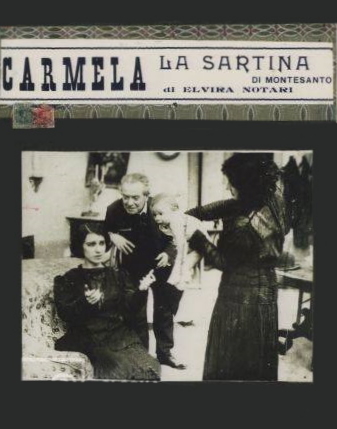
The pair of them now realise that the letter is in Carmela’s hands and hurry to find a way to get it back. Meanwhile, the inspector continues investigating the young nobleman and uncovers some interesting leads. Time passes and Carmela, for months secretly pregnant, gives birth to the count’s son and tries to get back in touch with the boy’s father.
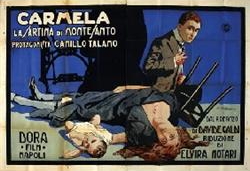
The count hurries to her, intending to regain possession of the letter, but Carmela immediately forces him to legally recognise their child and threatens to deliver the letter to the police, accidentally revealing where she’s hidden it with a gesture. The Count hurls himself on the chest of drawers trying to open it with a pair of large scissors. Carmela tries to stop him, but is stabbed in the chest with the very same scissors. Count Louis grabs the letter and flees.
Meanwhile, the police inspector, through a detailed investigation, manages to identify the perpetrators of the first crime. The servant Giangrande and another criminal, who is found dead after a reckoning. He confesses the crime and dies.
Giangrande’s trial begins but, although it appears obvious, it seems impossible to frame Count Luigi as the instigator. All of a sudden, Carmela’s sister bursts into the courtroom with a written declaration from the deceased, revealing the contents of the letter recovered from the wicked nobleman, in which Giangrande asked for a balance of the sum due to him for the murder commissioned by Louis.
References
I Colori del Buio, Il Cinema Thrilling Italiano Dal 1930 al 1979 / Luca Rea (Pg:24-25)
Elvira Notari, The First Neorealist / La Sinistra Quotidiana
 One Man and His Droid