A scientist working on a drug which will render atomic radiation harmless to humans finds out that he is secretly being used by higher powers who plan to weaponize his discovery.
According to Wikipedia Italy started producing nuclear energy in the early 1960s, but all plants were closed by 1990 following the Italian nuclear power referendum. As of 2018, Italy is one of only two countries (the other one being Lithuania) that completely phased out nuclear power for electricity generation after having operational reactors.
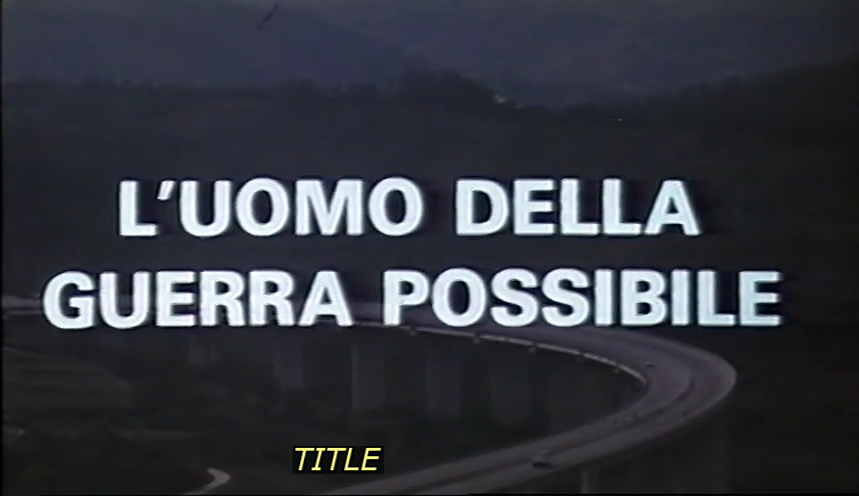
Given that the nuclear power referendum which eventually shut down all the reactors was held in 1987, it is quite possible that L’Uomo della Guerra Possibile was spared from a fate worse than death simply because it just happened to touch upon what was fast becoming a hot topic at the time. Unfortunately, it is hard to say for sure because there is very little information available about the film or its seemingly troubled production and distribution history.
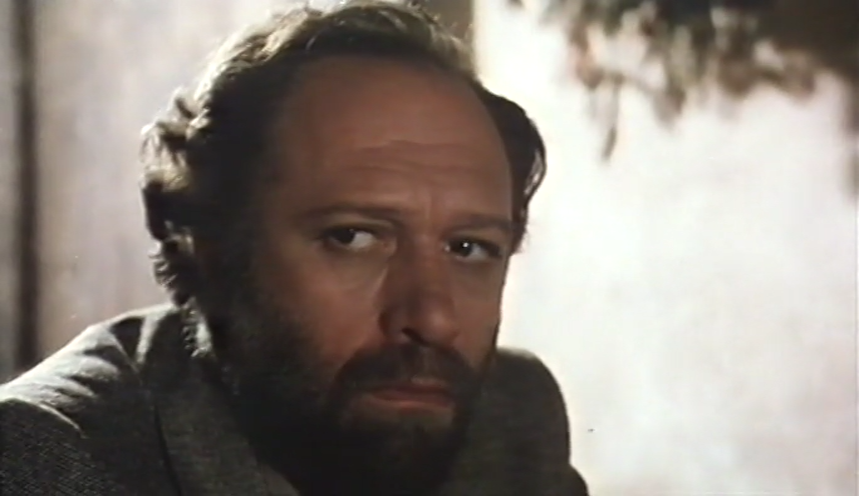
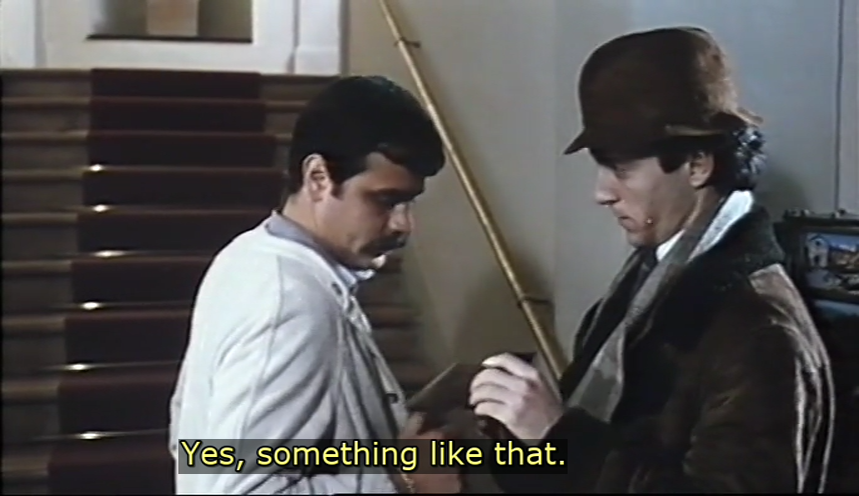
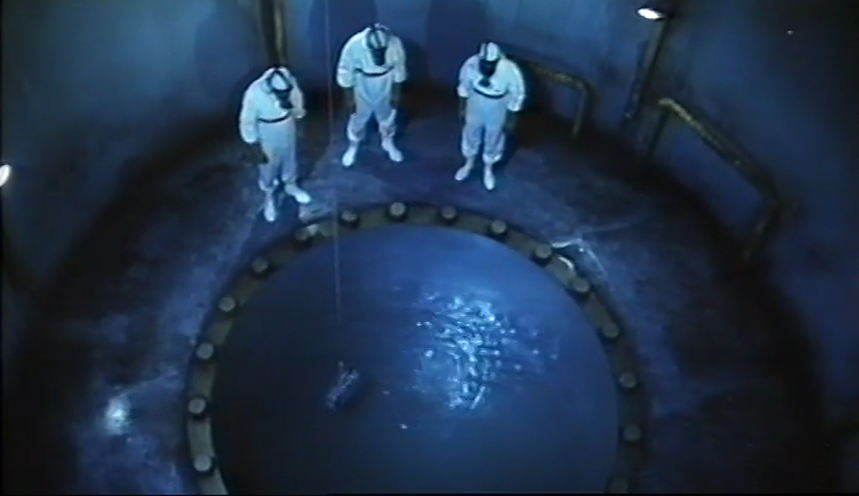
The following review comes from filmitaliani.altervista.org
Based on the novel The Diary of a Provocateur by journalist Dario Paccino, a precursor to the environmental movement, published in 1977 in the “I libri del No – Serie verde” series. The film was shot in 1979 with the title Una Notte di Pioggia (One Rainy Night) and produced by the cooperative COALA Spettacoli Autori e Lavoratori Associates, it was eventually released in 1986 with a new title L’Uomo della Guerra Possibile. Despite being received positively at the Venice Film Festival, it only received a limited release in independent regional cinemas, a very limited release on VHS courtesy of Videa in 1989, and has never been screened on television.
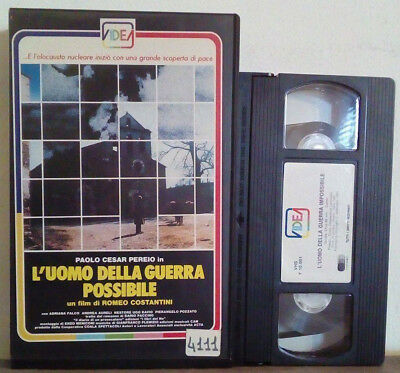
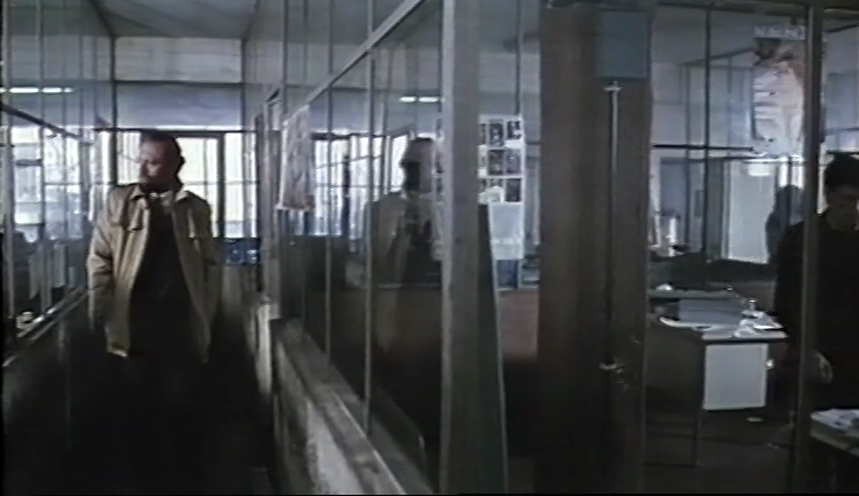
Extremely well produced and boasting strong performances, despite the obviously low budget, Romeo Costantini’s film analyses and embodies the fear of nuclear power that agitated Europe in the period in which it was shot (the end of the 1970s, when there was talk of installing U.S. “Euromissiles” in Comiso. It was eventually released on the eve of the nuclear referendum which had been triggered by the catastrophe in Chernobyl) Its undeserved obscurity to which it has been condemned appears to be politically motivated. Worthy of rediscovery.
Update May 2022
Interview with Romeo Costantini via email with onemanandhisdroid
Introduction & Working with Mario Bava and Dario Argento
I’ve always had a natural talent for drawing. I painted, sold paintings, and that influenced my decision to study Set Design at the Academy of Fine Arts.
Generally speaking, when you study set design, you imagine that your career will lead you into theatre. I actually designed the sets for several operas. My move into cinema, however, was purely accidental. I was 25 at the time, and through a chance encounter with a set designer, I was initially taken on as his assistant.
The Mario Bava film (Four Times That Night) was made on a fairly limited budget, with very little money available to construct sets specifically for the film. But precisely because of that, Bava’s extraordinary ability to use the camera and photography to create unusual effects became a very important technical education for me.
I particularly remember a psychedelic-looking party scene that was created in one of the soundstages at the De Laurentiis studios on the Via Pontina. Bava asked me to have nothing more than a gigantic, extremely inexpensive cube, several metres wide, constructed on the stage, and to find him some shiny, brightly coloured plastic objects such as cutlery holders, plate racks, and various Oriental-style objects, including Chinese figurines and so on.
The enormous cube, standing alone in the middle of the large soundstage, looked rather drab, even though it was lit from the inside. But the director positioned the camera at a certain distance and created a series of perspectives around it using the plastic cutlery holders. The cutlery holders looked like walls. Then, by aligning one of the tiny Chinese objects with the surface of the cube, he managed to create the impression that the cube was topped by an enormous sculpture of a horse.
With some young people dancing beneath the cube, the right lighting and the perspective created by the lens, the scene that was filmed appeared to be a huge, colourful ballroom. I don’t know whether the entire shot, or only part of it, was ultimately included in the final version of the film.
As for Dario Argento’s films, particularly The Bird with the Crystal Plumage, the experience was extremely creative. Dario was very much immersed in the making of his first film as a director, and he gave his collaborators a great deal of freedom to take the initiative.
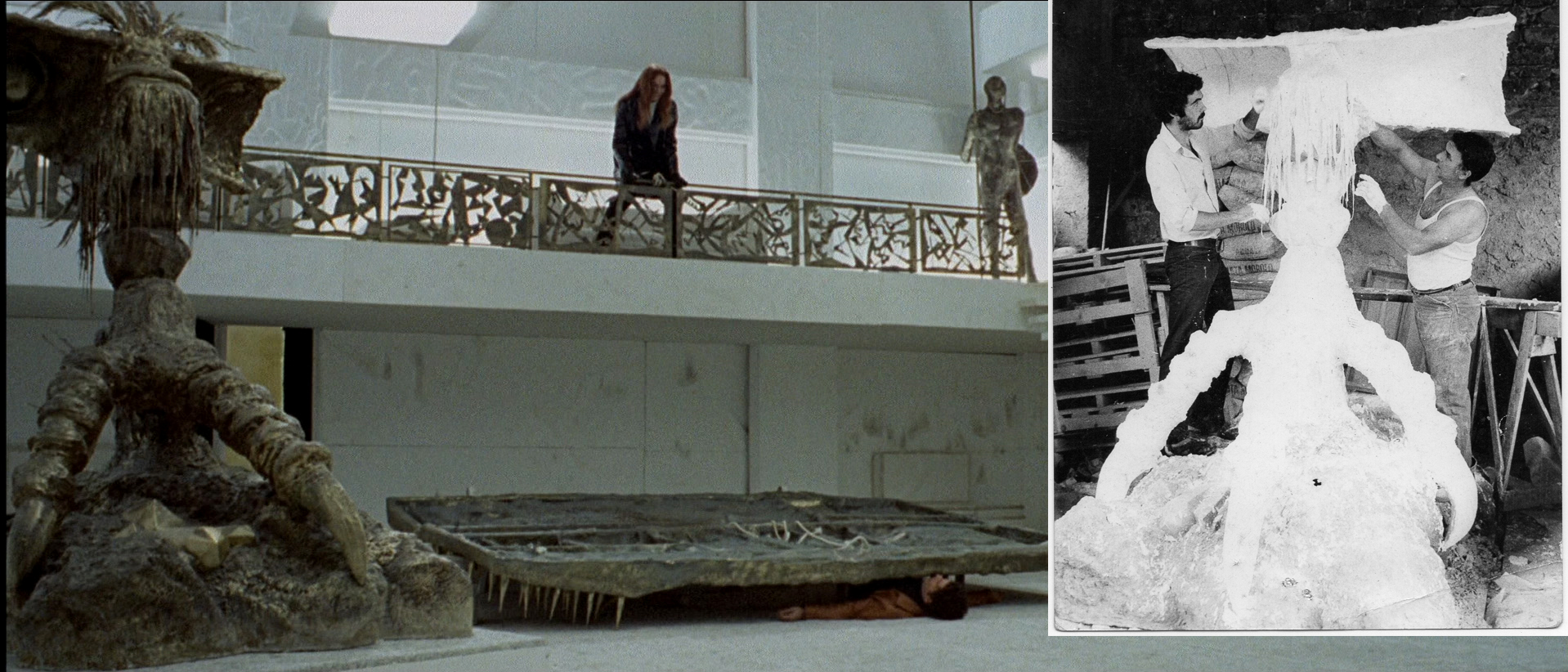
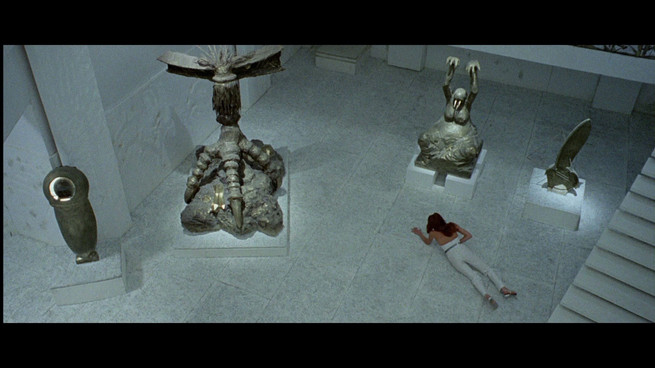
The most demanding set in the film, and the most important one in terms of the story, was the art gallery. It was made using a layer of polystyrene sculpted with a flame. In those days, polystyrene was practically unknown as a material in cinema, and I believe that with that film we helped make it popular among the set builders working in the soundstages. I designed and personally made the sculptures for the gallery, using a plaster base and various other materials, with the help of a plasterer from the De Paolis studios.
One Rainy Night
I met Dario Paccino in 1977. I was already writing screenplays, and he asked me to write a book for a publishing house called AREA, which had recently been established by a group of writers, including Paccino himself. So I published the collection of stories Non c’era una volta (Not once upon a time), and I had the opportunity to read Paccino’s book Il diario di un provocatore. The two things that struck me most about the book were a section of the story set in a community of elderly people, and the character of the protagonist, who is a scientist.
Paccino agreed to let me incorporate these two elements that had struck me into a new storyline, so I was free to take the story—and therefore structure the screenplay—in a direction that dealt with the themes that were at the heart of the emerging anti-nuclear movement. Since the screenplay conveyed the importance of the subject fairly well, the crew was very enthusiastic and cooperative. But the main problem was the large number of shots scheduled in the shooting plan, combined with the limited amount of time available to film them. The shooting schedule was, naturally, dictated by the budget. Since it was fairly limited, it could not allow for a shooting period of more than five weeks. Furthermore, during the editing stage, the French Gaumont decided to halt all the films being produced by Gaumont Italia.
I’ve stayed in touch with Paolo Pereio, who lives in Brazil, while during the first few years I would occasionally see the Italian members of the cast and crew when the film was invited to festivals. Later on, I brought several members of the crew back to work on films and other projects I made subsequently.
Politics
Yes, it’s true. From the point of view of the institutions and producers, the film industry was around 80 to 90 percent right-wing. On the other hand, the entertainment workers’ union and the ANAC (National Association of Film Authors), which I was a member of at the time, were strong left-wing organizations.
In Rome, the Years of Lead were felt more in everyday life — the news, police checkpoints, and the general climate of emergency — than in the cinema. It was only later that some films about terrorism began to appear.
Alfonso Brescia
Alfonso Brescia was a very polite and kind person, and I was very fond of him. I believe he appreciated me as well. I was 27 or 28 at the time. I worked as the set designer on many of his films, and I wrote two or three screenplays for him: Anno zero – Guerra nello spazio, and two films from the series he made about White Fang.
As far as I was concerned, Alfonso had just one “flaw”: because he thought I had a very cinematic appearance, and it saved the production money, my fee as a set designer almost always included a small acting role for me. There was nothing I could do to convince him that I didn’t like being in front of the camera. In the end, with his sly, good-natured manner, he always managed to talk me into it.
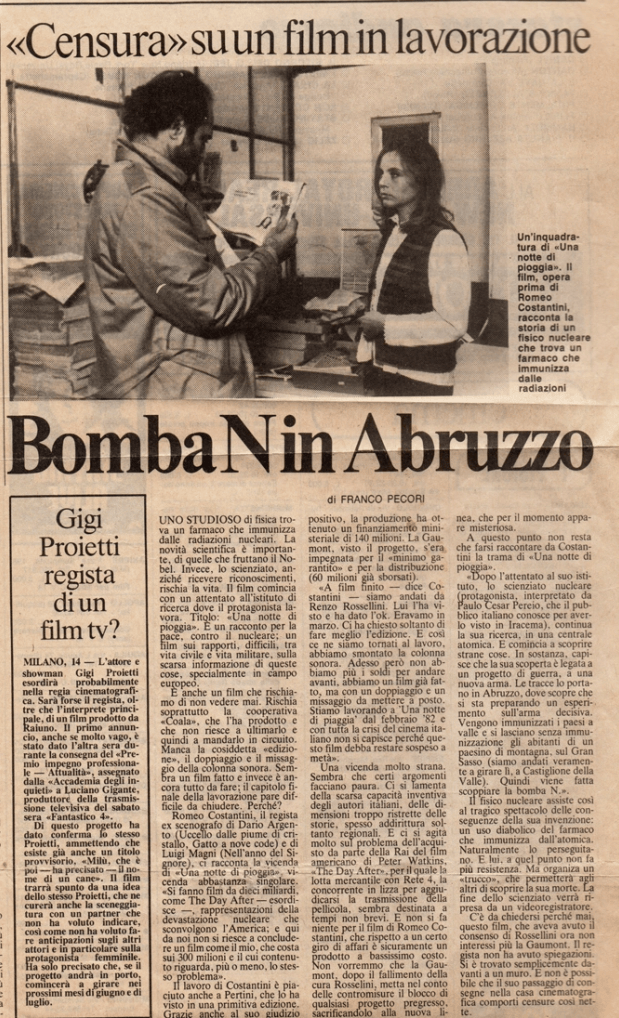
English translation (work-in-progress)
“Censorship” on a film in progress
N-Bomb in Abruzzo
by Franco Pecori
A NUCLEAR PHYSICS SCIENTIST discovers a drug that immunizes against nuclear radiation. The scientific discovery is important, of the kind that yields Nobel Prizes. Instead, the scientist, rather than receiving accolades, risks his life. The film begins with an attack on the research institute where the protagonist works. The title: “Una notte di pioggia” (A Rainy Night). It is a story about the night, against the nuclear threat; a film about difficult, hidden relationships between civilian and military life, based on the scarce information available on these matters, especially in European contexts.
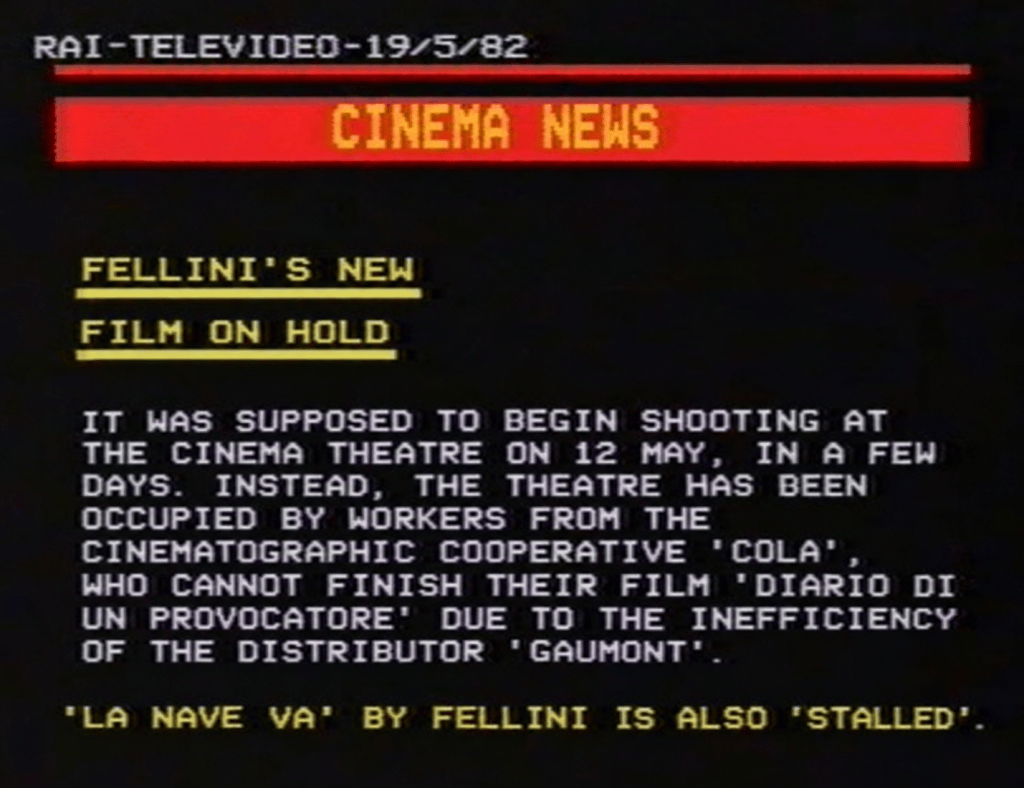
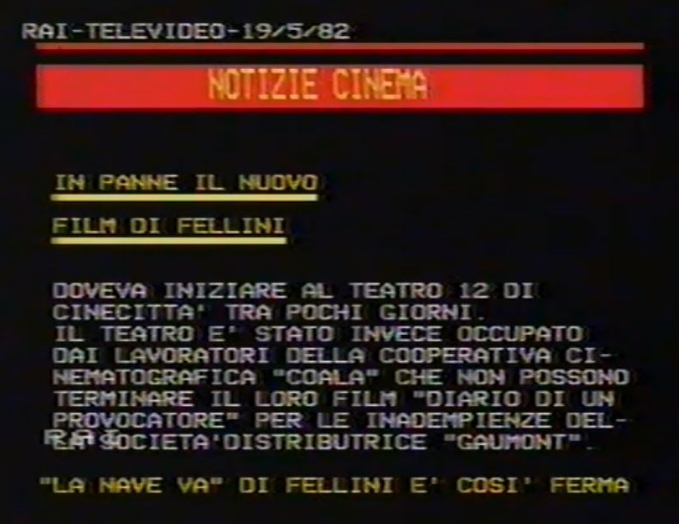
It is also a film that risks not being seen. It risks especially for the cooperative “Coala,” which produced it and is currently unable to complete it and thus put it into distribution. The so-called “finishing phase”—the dubbing and mixing of the soundtrack—is missing. It is a well-made film, yet it is difficult to wrap up. Why?
Romeo Costantini, the director and former set designer for Dario Argento (The Bird with the Crystal Plumage, The Cat o’ Nine Tails) and Luigi Magni (In the Year of Our Lord), tells us. The context is unique. Films are being made with tens of billions of lire, like The Day After—crude, spectacular representations of the nuclear devastation of America; and here at home, we are unable to conclude a film like this one, which costs barely 300 million lire and whose content concerns, more or less, the same problem.
The work of Costantini received a positive assessment from a ministerial committee, securing a 140 million lire funding contribution. La Gaumont, central to the project, committed to a “guaranteed minimum” and distribution (60 million lire already paid out).
“With the film finished,” says Costantini, “we went to Renzo Rossellini. He saw it and loved it. This was in March. He only asked us to make some minor alterations. But now, when we need the money to move forward, we have a film that is already done, but with a temporary soundtrack. We have been working on ‘Una Notte di Pioggia’ since February ’82, and with all the crisis in Italian cinema, one cannot understand why this film must remain suspended halfway.”
It is a strange story. It seems that certain topics provoke fear. There are rumors about the scarce innovative capacity of Italian authors, but when dimensions too restricted for our tastes appear, or even regional scales, things stall. And there is a lot of agitation around the problem of acquiring the rights to the American film by Peter Watkins, The Day After, for which the commercial network Rete 4 is in a fierce race against Rai, destined for a broadcast within a short timeframe. And they don’t want to hear about Costantini’s film, which compared to a certain line of business is surely a product at a very low cost. We wouldn’t want Gaumont, after the collapse of the French parent company Gaumont Italia, to compromise its progress by submitting to the new line of logic, which for the moment appears mysterious.
At this point, we can only let ourselves be guided by Costantini’s narrative to trace the framework of the plot of “Una notte di pioggia”.
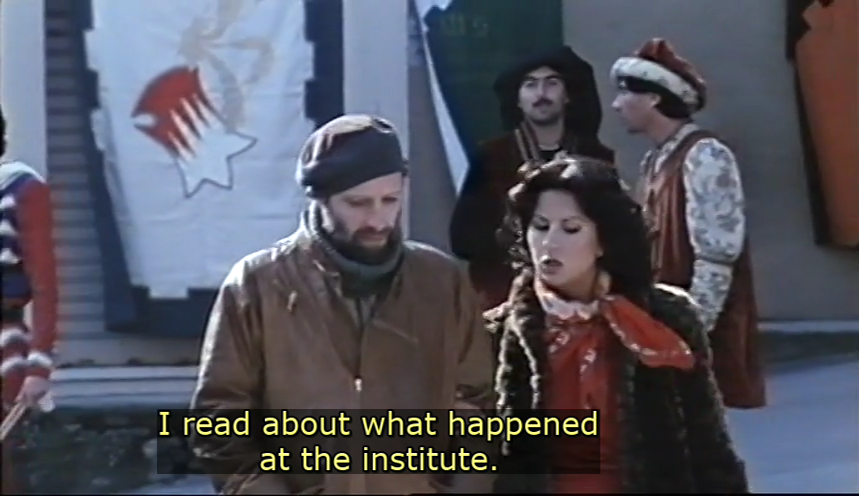
After the attack on his institute, the scientist (the protagonist, played by Paulo Cesar Pereio), whom the Italian public knows for having appeared in Iracema, continues his research in a hidden center. And he begins to discover strange things. In short, he finds out that a project for a war, for a decisive new weapon, is being prepared. The clues lead him to Abruzzo, where he discovers that an experiment with the ‘N’ bomb is about to be launched. The villages down in the valley are evacuated, and the people are left without the immunizing drug (we are indeed going to shoot these scenes in Castiglione della Valle). Therefore, the N-bomb is detonated.
The nuclear physicist witnesses the tragic spectacle of the consequences of his invention: a devilish use of the drug that immunizes against the atomic blast. Naturally, they persecute him. And at that point, he no longer resists. He organizes a ‘trick’ that will allow others to discover his death. At the end, the scientist is found dead by a video recorder.
There is reason to wonder why this film, which had received the consensus of Rossellini, is now of no interest to Gaumont. The director has received no explanations. He simply found himself up against a wall. And it is not possible that his transition from set designer to director entails such negative consequences.
Original Italian text…
Introduzione
Sono sempre stato portato per il disegno, ho dipinto, venduto quadri e questo ha influenzato la mia scelta di frequentare Scenografia all’Accademia di Belle Arti.
In genere facendo Scenografia si immagina di avere uno sbocco lavorativo nel teatro (ho fatto la scenografia di diverse opere liriche), mentre l’avvicinamento al cinema è stato puramente casuale (a 25 anni) e dovuto alla conoscenza fortuita con uno scenografo che mi ha preso inizialmente come suo aiuto scenografo.
Lavorando con Mario Bava e Dario Argento
Il film di Mario Bava era un film abbastanza povero con poche possibilità economiche di costruire ambienti appositamente per il film. Ma proprio per questo l’eccezionale capacità di Bava di utilizzare la MDP e la fotografia per creare effetti particolari è stata per me una scuola tecnica molto importante.
Ricordo particolarmente una scena dal clima psichedelico di una festa creata in un teatro degli stabilimenti De Laurentiis sulla via Pontina. Bava mi chiese di far costruire in teatro esclusivamente un gigantesco ma economicissimo cubo di molti metri di lato e di procurargli degli oggetti di plastica lucidi e colorati come portaposate, portapiatti e altri oggetti orientaleggianti come statuine cinesi ecc.
Il gigantesco cubo, da solo in mezzo al grande teatro, anche se illuminato dall’interno risultava piuttosto squallido ma il regista piazzo’ la macchina fissa ad una certa distanza e costruì intorno a questa una serie di prospettive con i portaposate di plastica. I portaposate sembravano pareti. Facendo poi coincidere uno degli oggetti cinesi di pochi centimetri con la superficie del cubo riuscì a creare l’impressione che il cubo fosse sormontato dalla enorme scultura di un cavallo.
Con dei ragazzi che ballavano sotto al cubo, le luci giuste e la prospettiva resa dall’obiettivo, la scena girata risultò una grandissima colorata sala da ballo. Non so se l’inquadratura sia stata poi montata tutta o in parte nella versione definitiva del film.
Per quanto riguarda i film di Dario Argento, specialmente nell’”Uccello dalle piume di cristallo” l’esperienza è stata estremamente creativa e Dario molto preso nella costruzione della sua prima regia, lasciava una grande libertà di iniziativa ai suoi collaboratori.
La scenografia più impegnativa del film e la più importante ai fini della storia era la galleria d’arte.
E stata realizzata con una fodera di polistirolo scolpito con la fiamma. Il polistirolo in quegli anni era un materiale praticamente sconosciuto nel cinema e credo che con quel film lo abbiamo reso popolare tra i costruttori in forza nei teatri di posa.
Le sculture della galleria le ho ideate e realizzate personalmente con una base di gesso e materiali vari con l’aiuto di uno stuccatore dello stabilimento De Paolis.
(nella foto sono quello con la camicia)
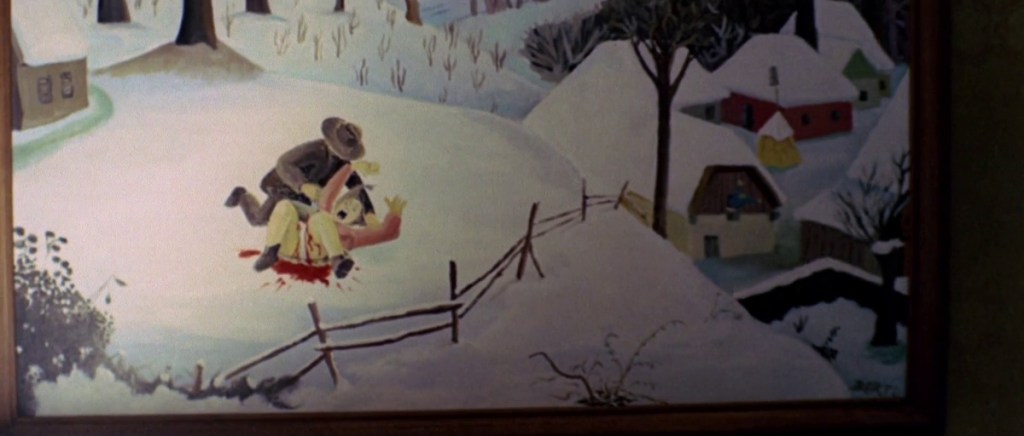
Ti allego anche la foto del quadro naif realizzato per la scena del pittore Berto (below)
Una Notte di Pioggia/L’Uomo della Guerra Possibile
Ho conosciuto Dario Paccino nel ’77. Io già scrivevo sceneggiature e lui mi chiese di scrivere un libro per una casa editrice ( AREA ) che era nata da poco per iniziativa di un gruppo di scrittori, tra cui lo stesso Paccino. Pubblicai così il libro di racconti “Non c’era una volta” ed ebbi modo di leggere il libro di Paccino “Il diario di un provocatore”.Le due cose che mi colpirono maggiormente del libro furono una parte di storia ambientata in una comunità di vecchi e la figura del protagonista che è uno scienziato.
Paccino fu d’accordo a lasciarmi calare in un nuovo intreccio le due cose che mi avevano colpito e così fui libero di portare la storia – e strutturare quindi la sceneggiatura- all’interno delle tematiche che interessavano il nascente movimento antinucleare.
Dato che la sceneggiatura trasmetteva abbastanza l’importanza del tema, la troupe fu molto partecipativa e disponibile. Ma il problema principale fu l’alto numero di inquadrature previste nel piano di lavorazione e il poco tempo a disposizione per girarle.
I tempi di ripresa erano dati naturalmente dal budget, che essendo piuttosto limitato non poteva prevedere una durata delle riprese superiore alle 5 settimane
Inoltre, durante la fase di edizione la Gaumont Francese decise di bloccare tutti i film in produzione da parte della Gaumont Italia.
Con Paolo Pereio Siamo rinatsi in contatto , dal brasile dove lui vive, mentre con gli italiani i primi anni ci siamo visti di tanto in tanto quando il film era invitato a dei festival. Invece, diversi tecnici della troupe li ho richiamati per il film o i lavori che ho fatto successivamente.
Politics
Si, è vero, il cinema dal punto di vista delle istituzioni e dei produttori era orientato a destra per l’80/90 per cento. Per contro erano forti e di sinistra il sindacato lavoratori spettacolo e l’ANAC (Associazione Nazionale Autori Cinematografici) a cui allora ero iscritto.
Gli anni di piombo a Roma i sentivano più nella vita di tutti i giorni – informazione, posti di blocco, e clima di emergenza – che nel cinema. Soltanto dopo sono arrivati alcuni film sul terrorismo.
Alfonso Brescia
Alfonso Brescia era una persona molto educata e gentile alla quale ero molto affezionato. Anche lui credo mi stimasse. Allora avevo 27, 28 anni Ho fatto lo scenografo in molti suoi film e ho scritto due o tre sceneggiature per lui: Anno zero guerra nello spazio e due della serie che fece su zanna bianca,
Per me aveva solo un “difetto” Alfonso: siccome secondo lui ero fisicamente cinematografico e per la produzione era un risparmio, nella mia paga di scenografo era quasi sempre compresa una mia partecipazione in un piccolo ruolo come attore. E non c’era niente da fare per convincerlo che non mi piaceva stare davanti alla MDP. Alla fine con i suoi modi sornioni mi convinceva sempre.

