Set against the cold, industrial backdrop of factory life in Turin circa the late 1970s, Pasquale Squitieri’s Savage Breed is an engaging slice of realist drama which certainly deserved a lot better. With its none too flattering imagery of the factories and factory life in general, the film was allegedly bought outright and taken out of circulation by car manufacturer Fiat, which took a rather dim view of Squitieri’s strikingly honest depiction of working conditions, and life in general, in their hometown.
«[Turin] offers, more than any other [city], provides a complete and frightening panorama […] of the torment of immigrants who do not integrate with the local population, because their problem is not only that of the living conditions in the factory – good or bad, today, almost satisfactory – but their total lack of tradition, of the folklore of their land, which means culture, language, theatre and is also an existential justification» (P. Squitieri, “La Stampa”, 23.2.1980)
“We faced many problems. The film was supposed to be shot entirely in Turin but, due to the particular climate of tension and fear, we were not allowed to shoot inside the factories, so we had to create an assembly line in studios in Rome» (L. Borghese, “La Stampa”, 23.2.1980)
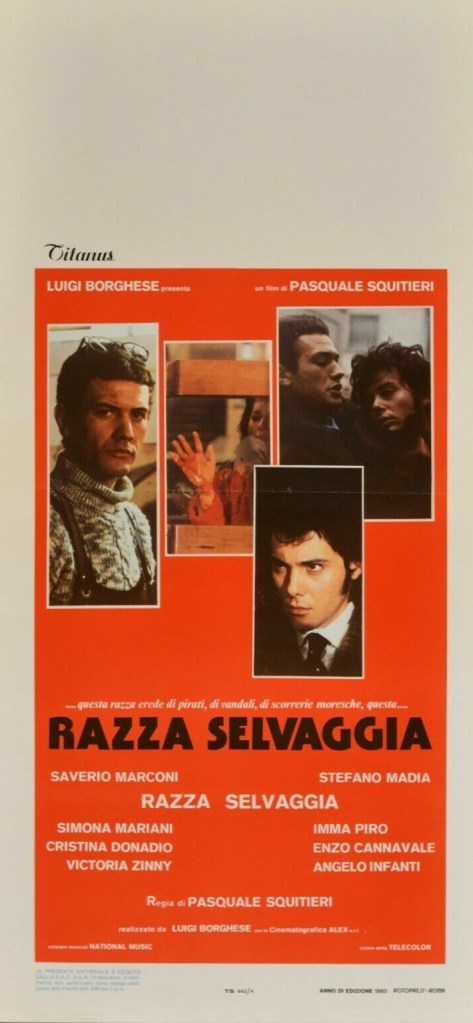
Locandina (courtesy of Poster-Mania)
«Among the letters to Mayor Novelli there is one sent by some right-thinking people protesting against the invasion of the people of the South, a “savage race”, heir of pirates and vandals. Pasquale Squitieri, a true Neapolitan, reverses the accusation against the Piedmontese: he makes a film called Razza Selvaggia and develops the thesis that that of the southerners in Piedmont was not an emigration ; but a “mass deportation”, which began in the last century, when Italy became “one and free”, as we read in school books, and continued until the automobile boom. Squitieri’s room, at a certain point in the film, lingers on monuments, the equestrian statues of Turin: sharp swords, pointed moustaches, harsh and rapacious expressions. Under the monuments passes the motorcycle of Mario Gargiulo, the protagonist of the film, a young worker who, being in the North, has lost his identity, his language (Squitieri begs us not to call Neapolitan a “dialect”), his political faith. That is, he has lost the pride of a civil past. “In Naples”, Squitieri declares, “there are no monuments to ‘conquistadores’, but to writers, poets, lawyers”. What is this “savage breed” then? Mario Gargiulo, to regain possession of his own language, must go through dramatic experiences: discovering that his sister Michelina is a prostitute with her almost pubescent daughter, that his best friend, Umberto, who seemed to have “made it”, having left the factory and having managed to run a nightclub, is actually a drug addict and is dying of heroin. […] Savage Breed belongs to a series of low-budget films and violence sprinkles almost all the shots, even the most harmless, even where the protagonists are intent on spaghetti with garlic and chilli» (C. Cosulich, ” Paese Sera”, 10.25.1980)
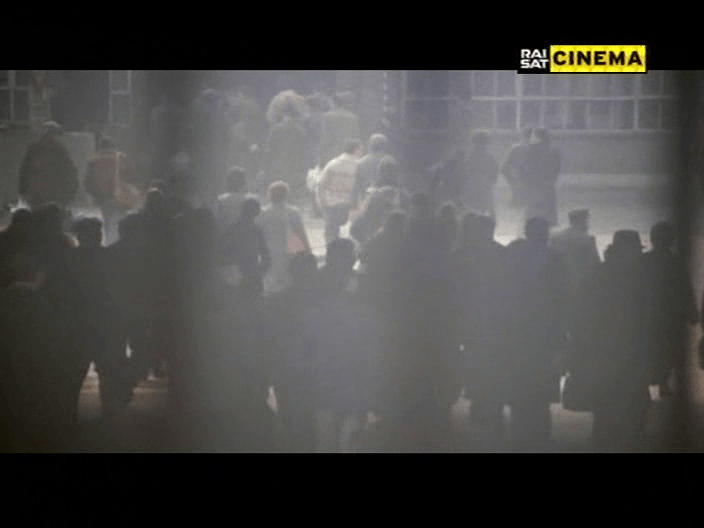
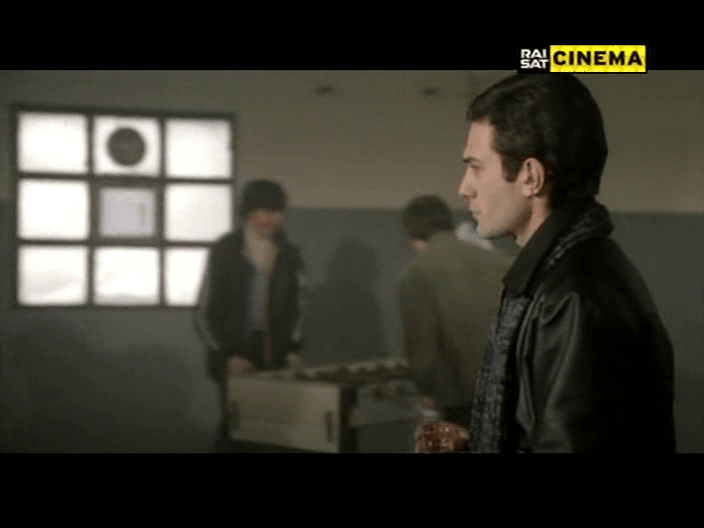
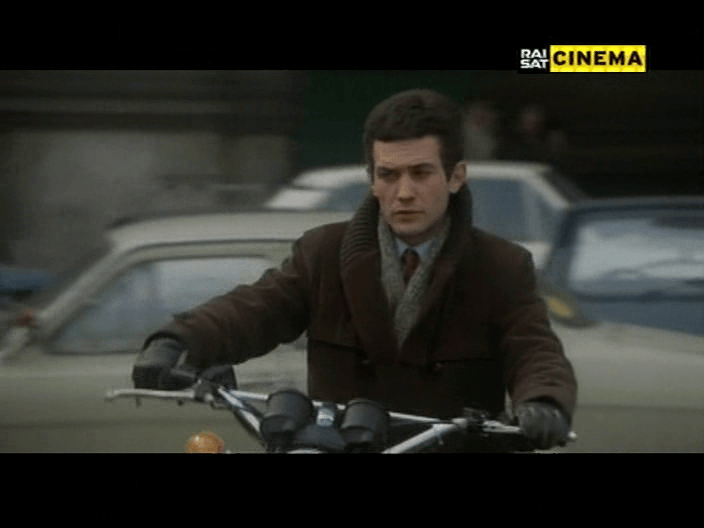
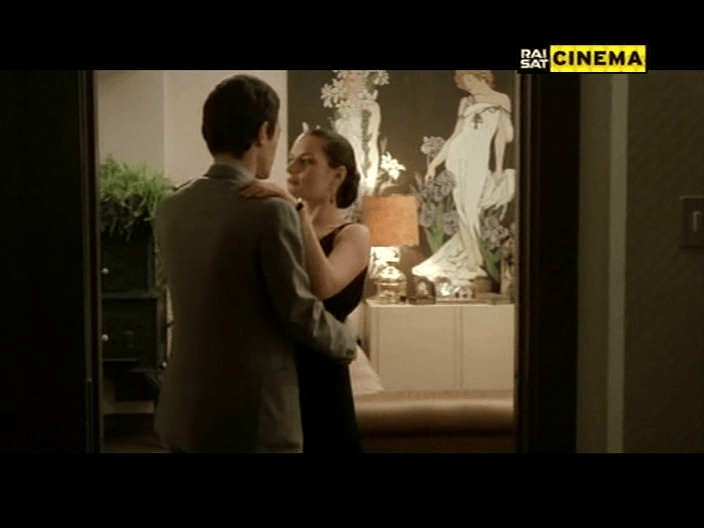
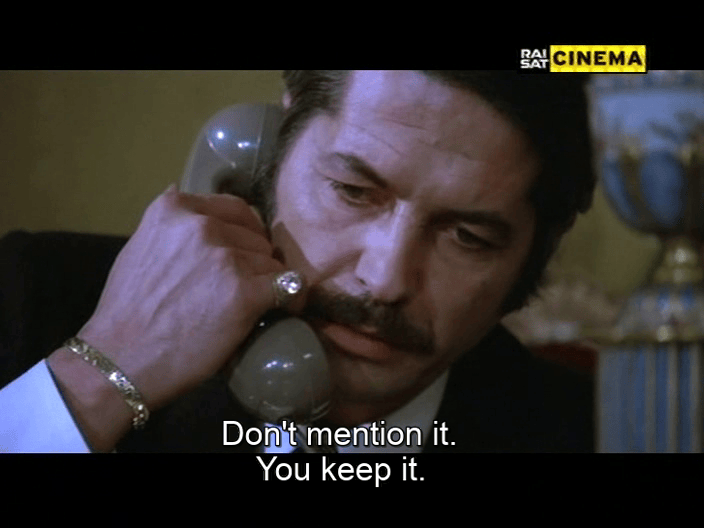
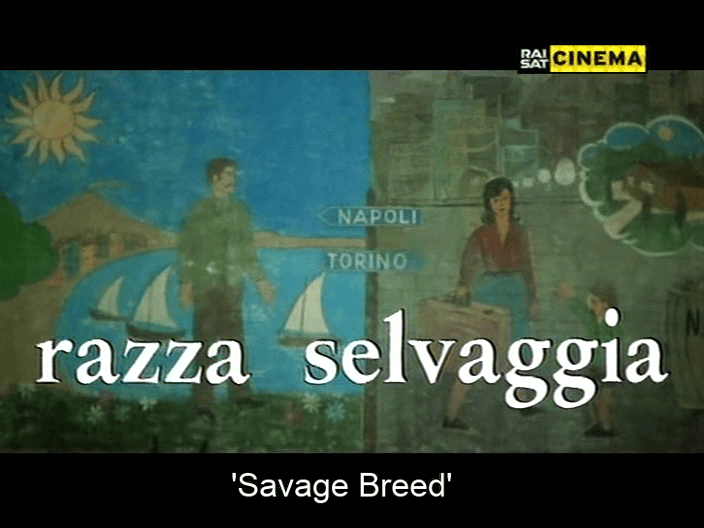
For a breakdown of the pinball machines featured in the bar… follow this link.
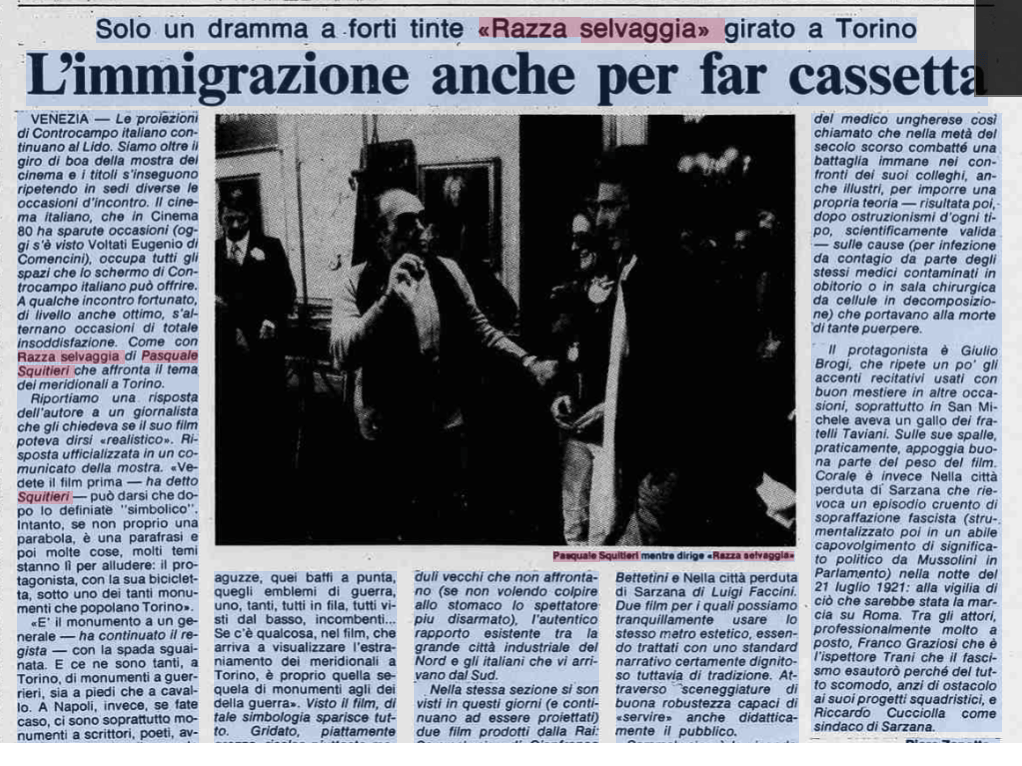
La Stampa, Friday 5th September, 1980
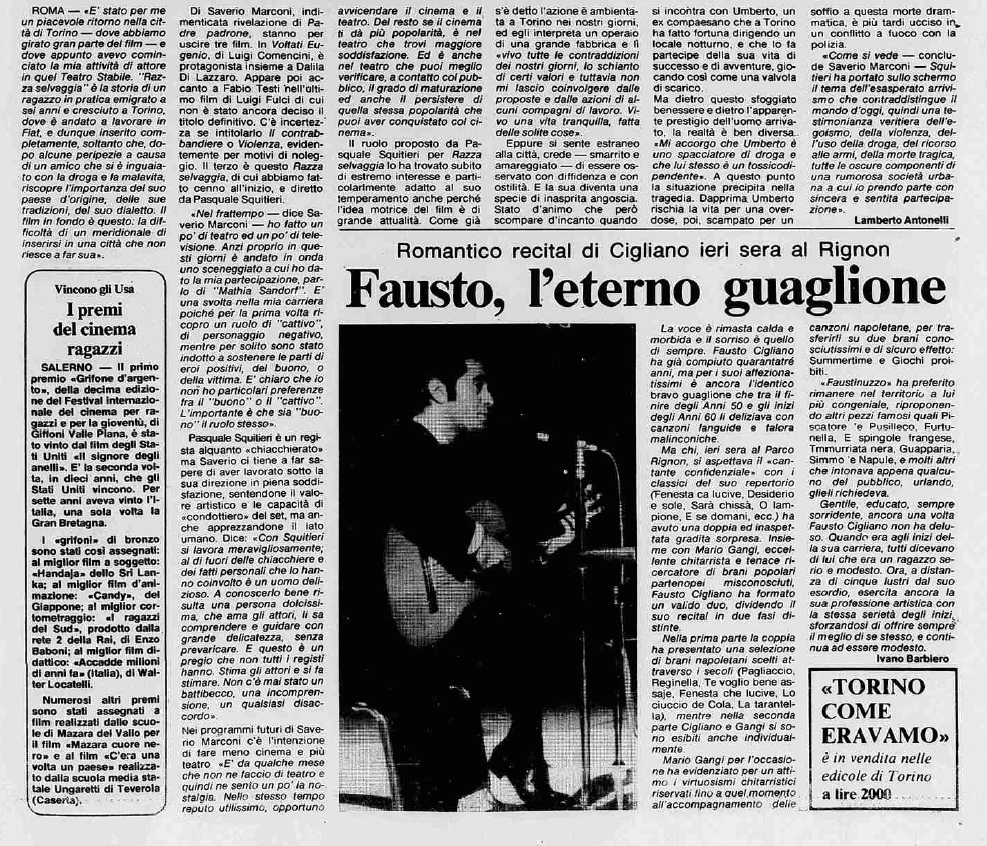
Interview with Saverio Marconi, La Stampa, Tuesday 5th August, 1980
 One Man and His Droid