Filmed at the height of WW2, from late 1942 to early 1943, Carmine Gallone’s Harlem is now considered a classic example of propaganda cinema. According to some accounts it was also the highest grossing film of the year. Curiously, the original edit of Harlem contained a number of scenes with an anti-American sentiment which would eventually be edited out for its re-release – most notably during the closing scene when an ambushed and dying Amedeo Nazzari implores his brother to return to Italy telling him that America is no place for an immigrant.
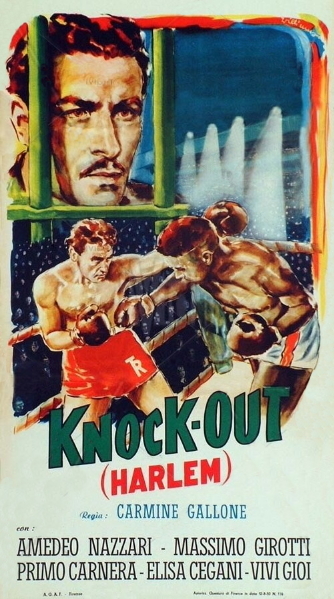
Locandina
Harlem’s historical links to fascism don’t end there – one of the principal cast members, Osvaldo Valenti, a loyal party member, was executed by partisan fighters alongside his then-pregnant wife less than two years later in 1945 – His name is also omitted from the opening credits of the re-release version – even though he plays such a key role in the film. Prior to this, in the original version, one of the original scriptwriters, Giacomo Debenedetti, wasn’t credited in the titles because of his Jewish heritage.
The Afro-American actors who appear in the film were actually real prisoners of war who were being held in a prison camp in Rome.
Critical reception
«Imbastito con un preciso scopo dimostrativo e didascalico in un finale alla Griffith e nel serrato montaggio di un incontro di pugilato. Dopo tanta penuria, dopo tanto ozioso paesaggismo, abbiamo visto la gente scattare in piedi, gridare battere le mani. Gli autori hanno voluto dare alla pellicola un surrogato dei film americani. Ci meraviglia che tra gli autori ci sia Cecchi che passa per competente di cose americane…


Availability
Web Download (RAI HD) – English (fan) Subtitles
 One Man and His Droid