Adriano Prosperi, a bank teller working in Milan, has spent years planning to steal a large sum of money and then disappear without leaving any trace of his existence. In collaboration with Giulia, his lover, he kills her husband who bears a striking resemblance to him, carries out the robbery and then burns his car with the dead husband’s body inside, making everyone believe a non-existent accomplice killed him and then escaped to Switzerland. Tilde, Adriano’s wife has been living separately to him for these three years and who is in a relationship with the manager of the company he robbed, isn’t totally convinced, and doesn’t hesitate to identify the remains of the man ‘burnt in the car’ as her husband. Everything seems to be going well for everyone who is directly or indirectly interested in the case, when a foolish mistake, committed by Adriano in his preparation and execution of the robbery, leads the police investigation to identify those actually responsible.
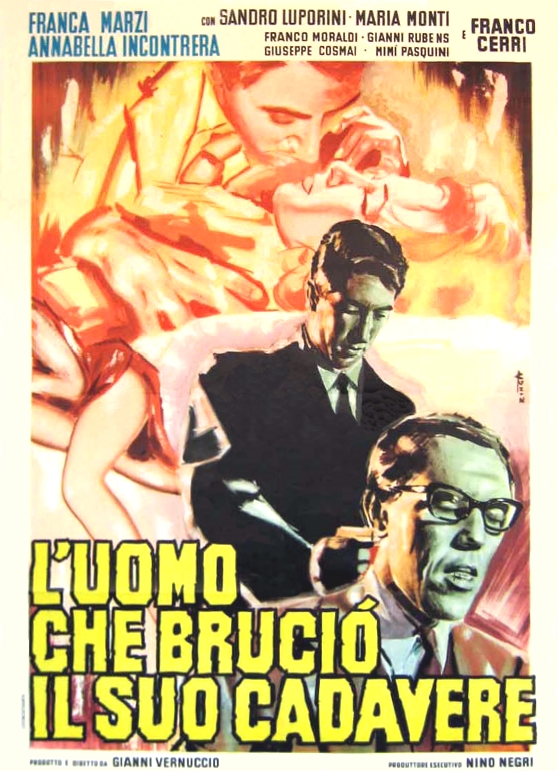
Due Fogli Poster
The official censor report lists an alternative title Bacio di Giuda / Judas’ Kiss – this could either be a pre-production title or a re-release title.
Director Gianni Vernuccio
Born in Cairo, Egypt, Gianni Vernuccio relocated to Rome to study directing at the Centro Sperimentale di Cinematografia. Following his graduation he went to work at the Istituto Luce where he started out editing short films and documentaries, eventually becoming a documentary director.
In 1944 he started working on feature film editing for a number of features produced at Cinevillagio – Milan’s answer to Rome’s Cinecittà. This short-lived studio was tasked with producing 20 films a year but was plagued with difficulties in a post-war Italy still very much in a state of disarray and the studio closed its doors not long after they had opened.
In 1945, finding himself in Milan along with camera-operator Massimo Dallamano, he filmed the corpses of Benito Mussolini, Claretta Petacci and other members of the fascist elite exposed in the piazza. Again in 1945 he begins work, in the Lombardy capital, on his first feature film Uomini Senza Domani (Men Without a Tomorrow) which was eventually released three years later. (Note: Men Without a Tomorrow was actually a second attempt at getting a feature released, with 15 minutes of the running time made up of footage from a previously unreleased film entitled Notte di Nebbia (Foggy Night) – thanks to Saimo from the Gentedirispetto forums for this info)
After a brief return to Egypt, where he directed two films, he returned to Rome to shoot Canzoni a Due Voci in 1952. Another 12 films followed where he handled producing, directing, photography and editing duties, until 1972 when he ceased working in the industry.
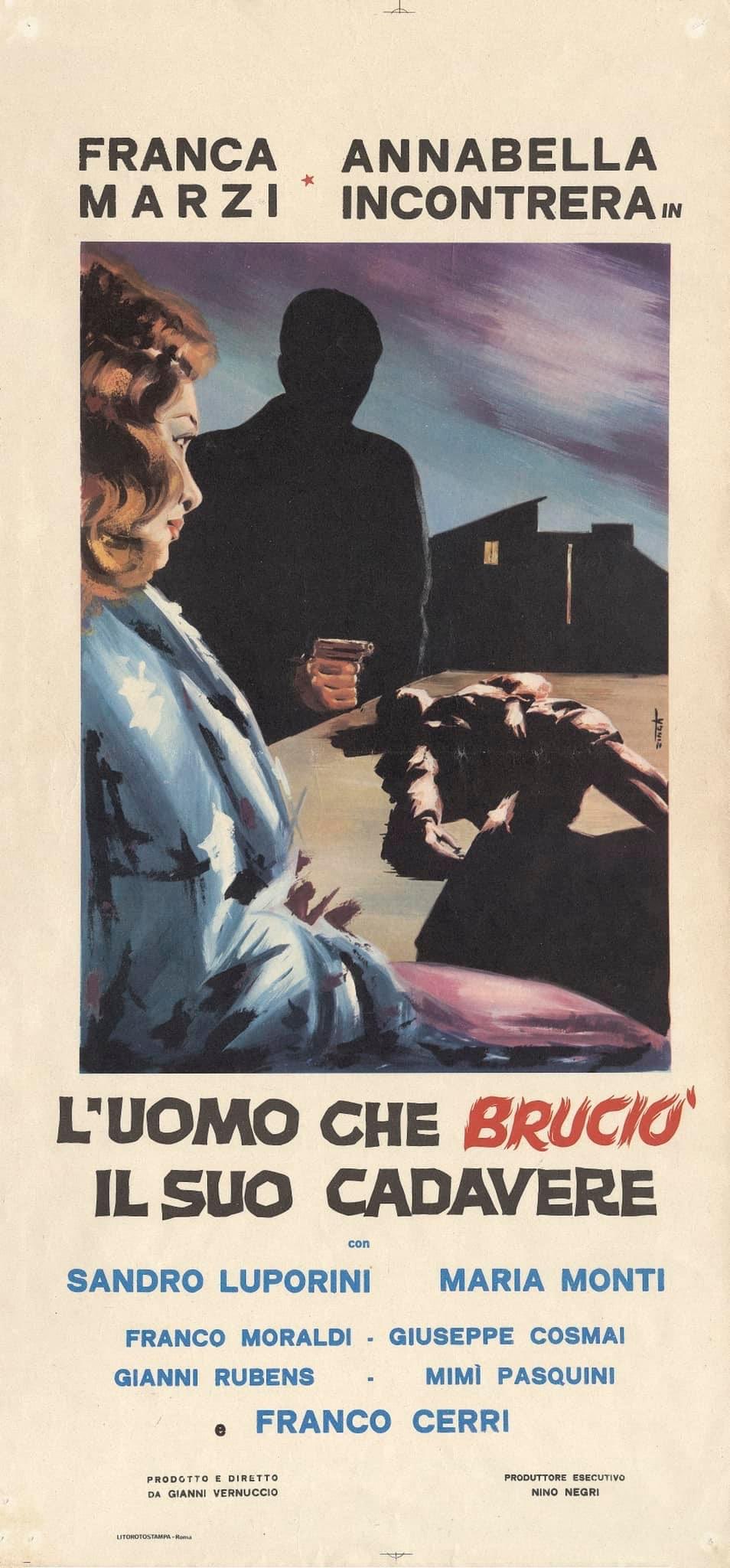
Locandina (many thanks to Octolove for the scan)
Newsreel interview with director Gianni Vernuccio (26/04/1963) courtesy of Istituto Luce
Who was Franco Cerri? An interesting article on the death of actor Franco Cerri (Italian)
Availability
Arguably one of the rarest Italian thrillers from the 1960s, L’Uomo che Bruciò il suo Cadavere is yet another title which has disappeared into the ether. I’ve heard rumours that the film was never actually released, although the existence of numerous promotional materials seems to suggest otherwise. It’s possible it had a very limited distribution deal and only played in select regions.
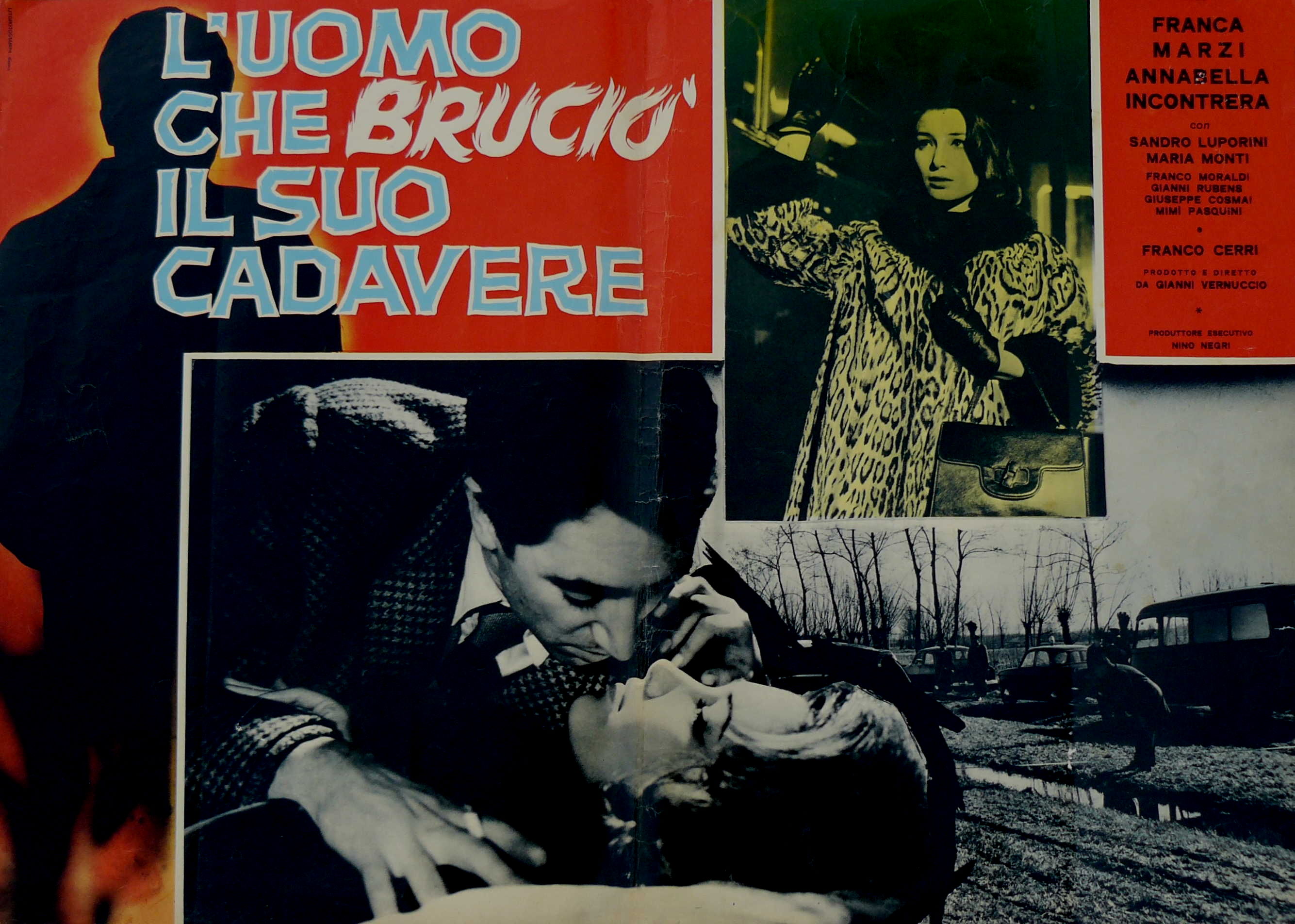
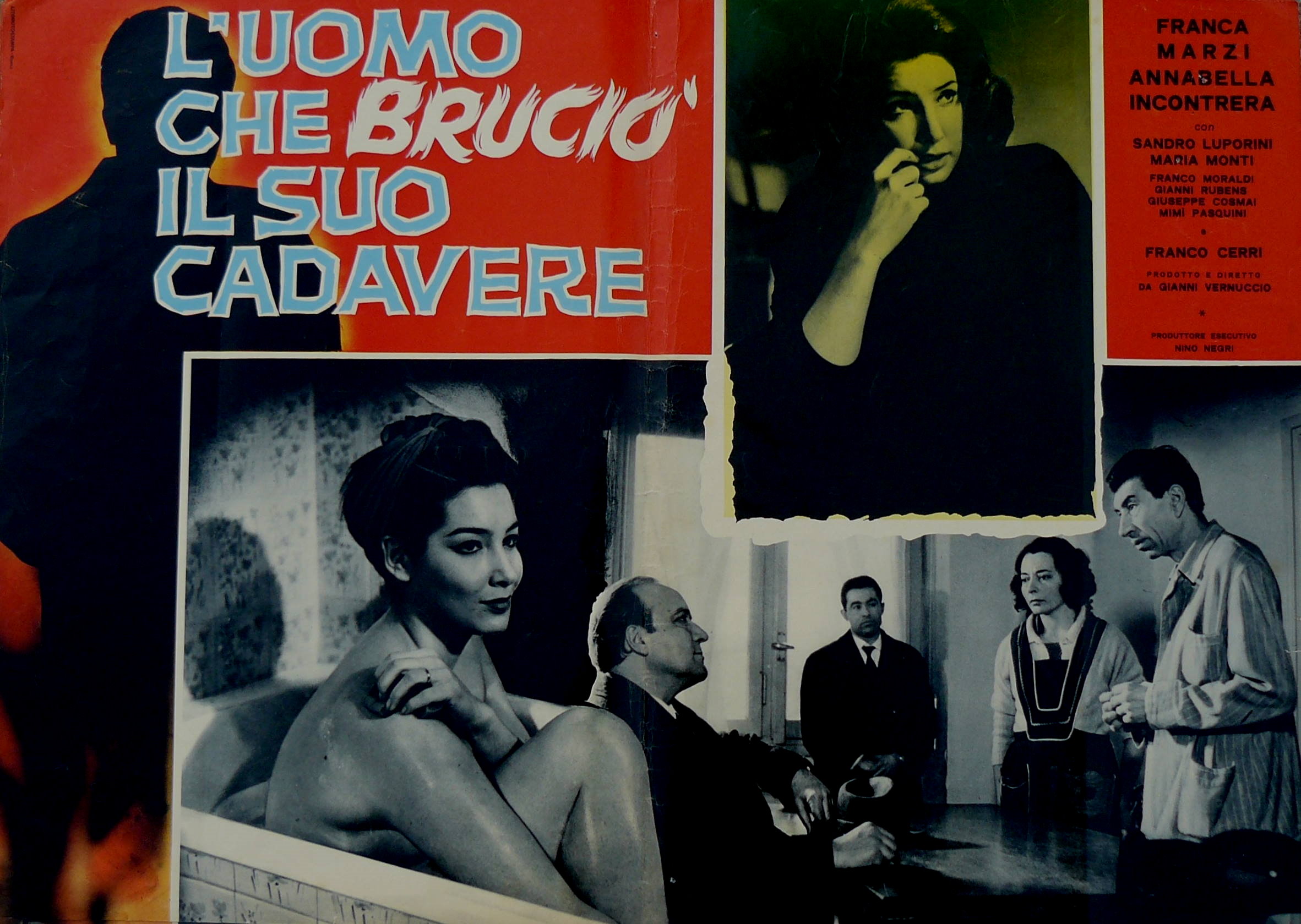
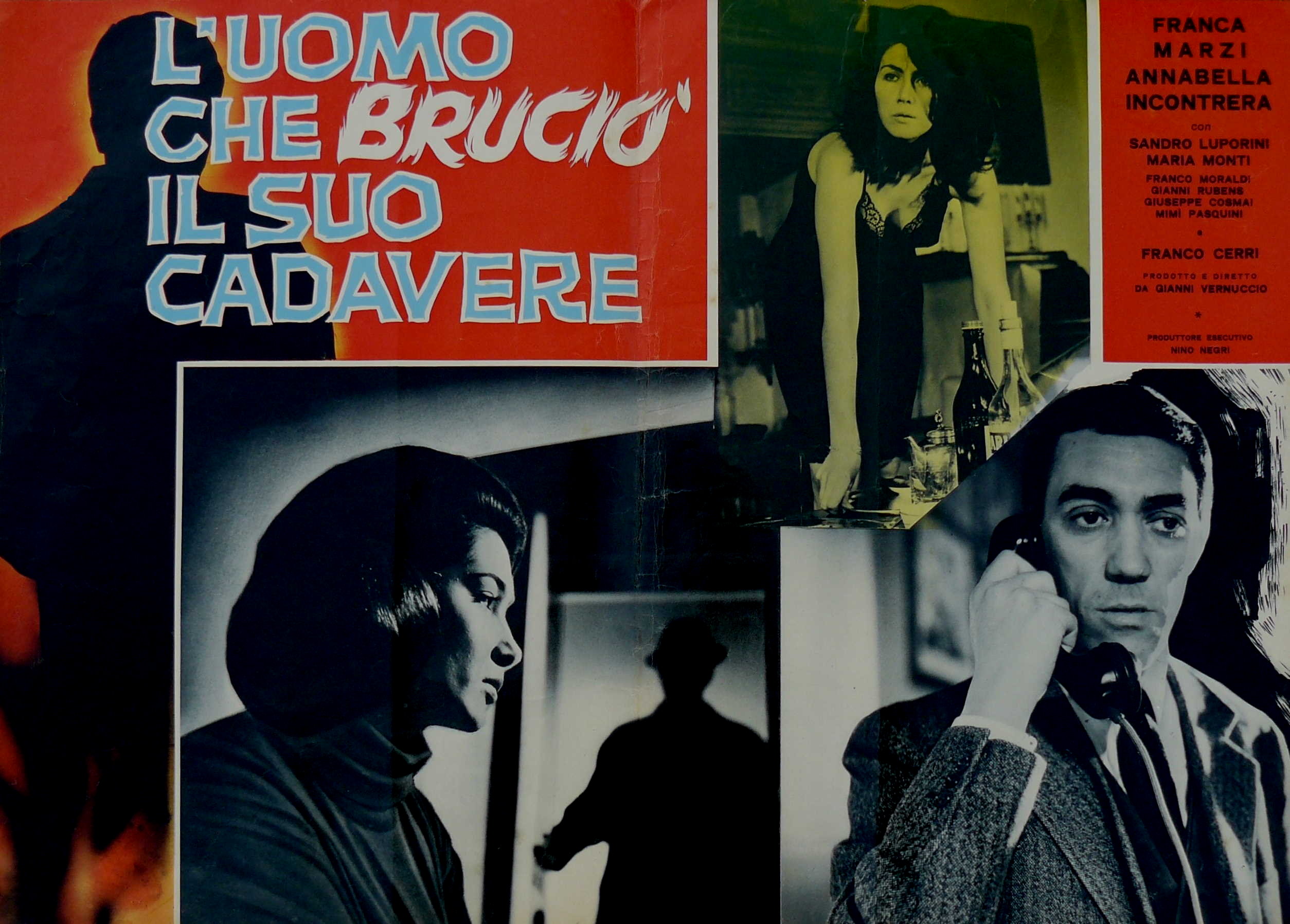
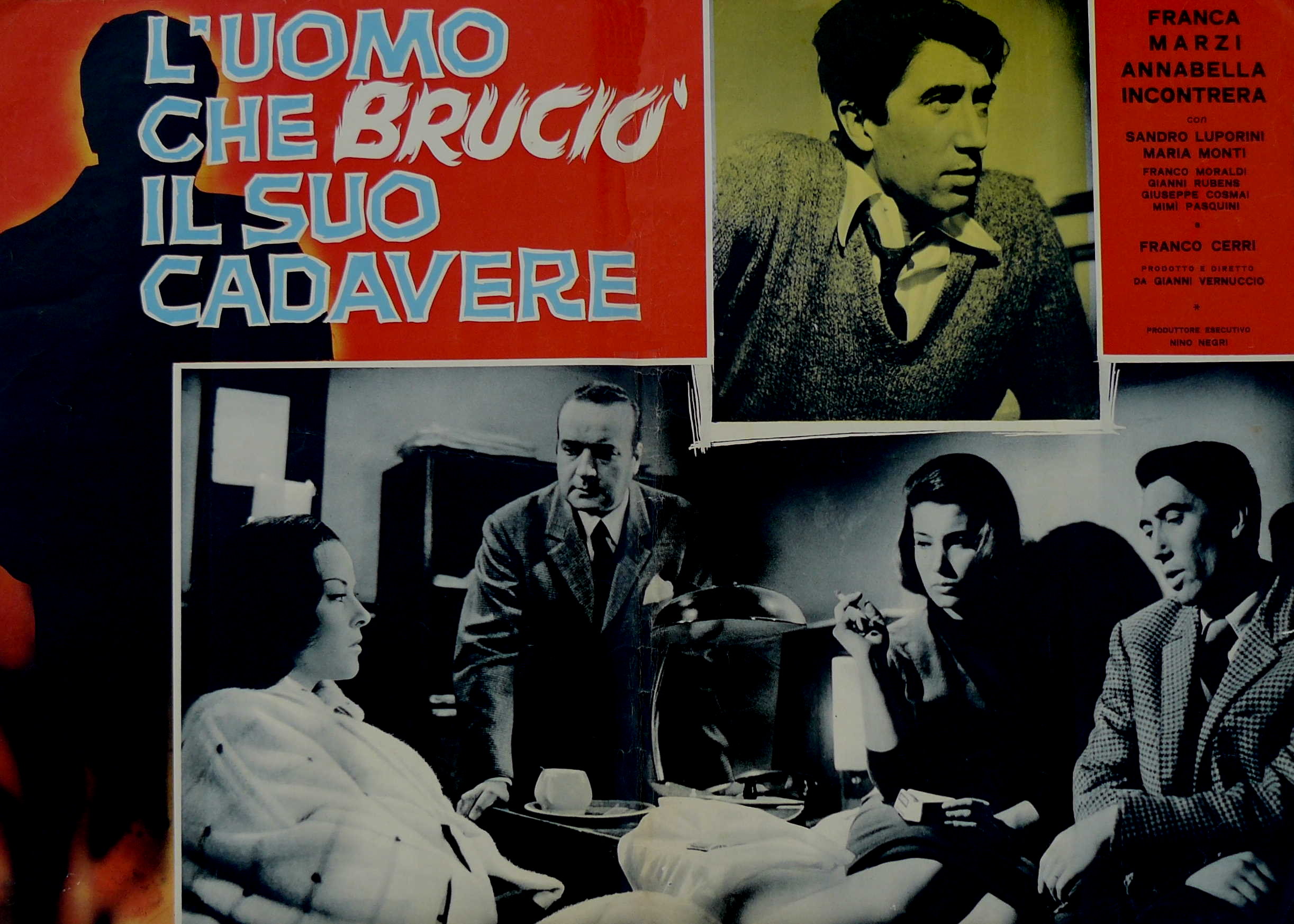
Fotobuste
Pdf file of censorship documents courtesy of cinecensura (mediafire link)
 One Man and His Droid